Renaudot centenary: Nicolo-Peccavi at the Cercle Drouant
The first novel ever awarded the Renaudot, presented by Philippe Zaouati with Gérard Lemarié. Doors 5:30 pm, limited seats.
Financier, novelist, essayist.
Founder of Mirova.
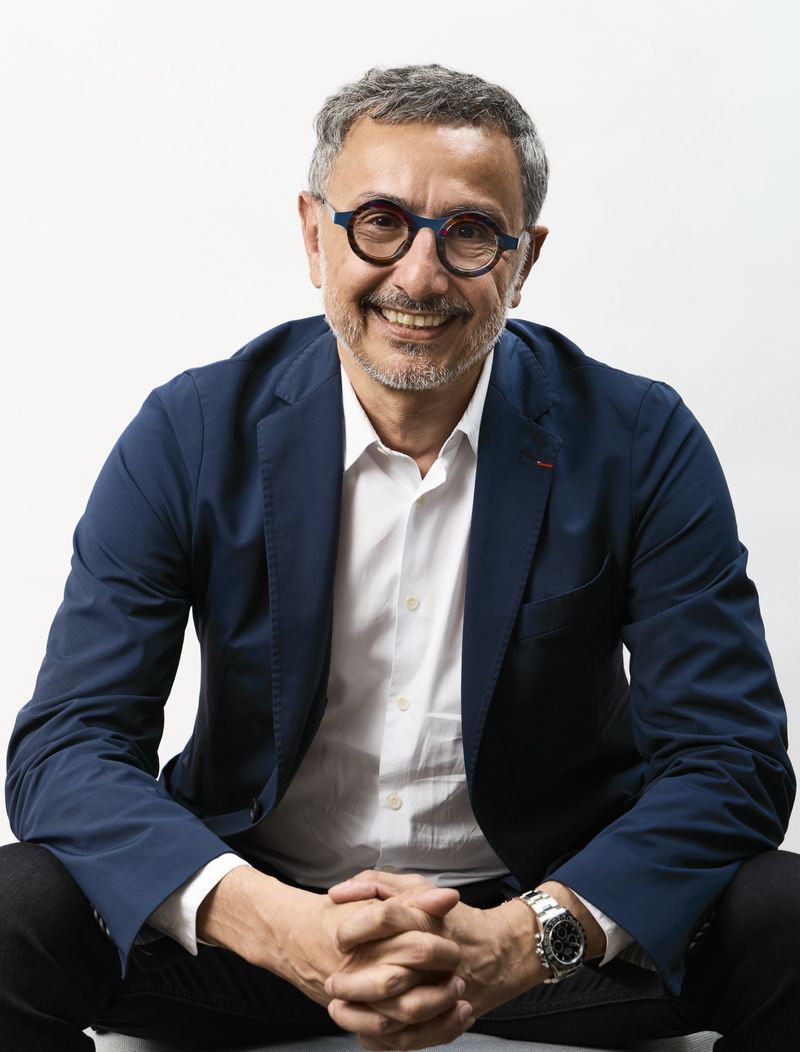
For more than twelve years I led Mirova, the responsible-investment asset manager I founded within Natixis. I write novels, essays and opinion pieces where finance, Europe, mathematics and history meet. I live between Paris and L’Isle-sur-la-Sorgue, in Provence.
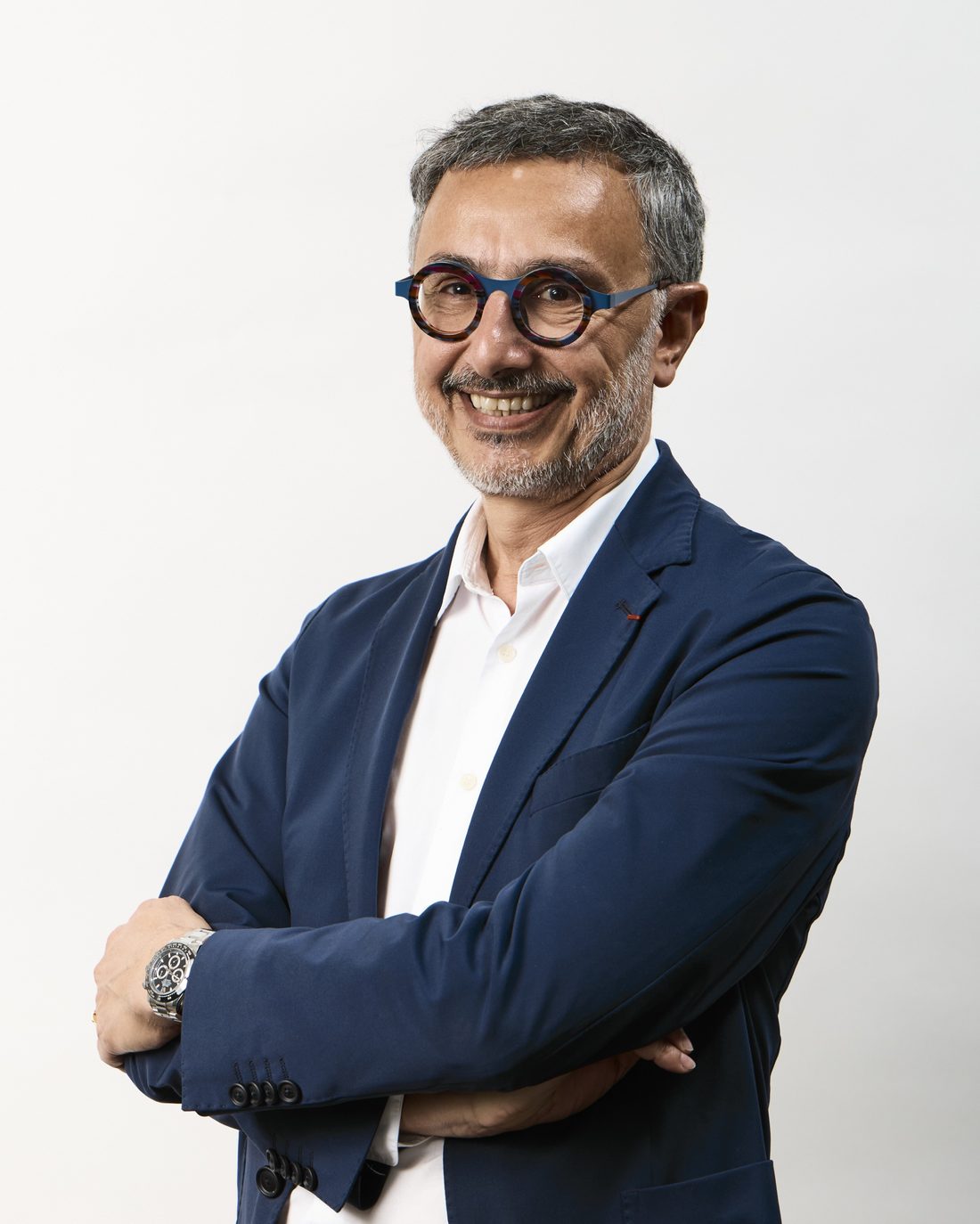
The first novel ever awarded the Renaudot, presented by Philippe Zaouati with Gérard Lemarié. Doors 5:30 pm, limited seats.
Adapted by Michel Bellier, directed by Julie Timmerman.
A hard book, a diagnosis I share — and an argument that undermines it.
A 2 °C world remains insurable, a 4 °C world does not: the line also applies to social violence.
The cost of social inaction, alongside climate risk.
On Nicolo-Peccavi and the Jews of the Comtat Venaissin.
Money is not neutral. It carries choices, risks and responsibilities — and those who manage it can no longer act as if nothing were at stake.Philippe Zaouati
Upcoming events, then the thread of activity: encounters, publications, stage.
The first novel ever awarded the Prix Renaudot, in 1926, presented by Philippe Zaouati with Gérard Lemarié. Doors at 5:30 pm, €30 contribution, limited seats.
Stage adaptation of the novel by Michel Bellier, directed by Julie Timmerman.
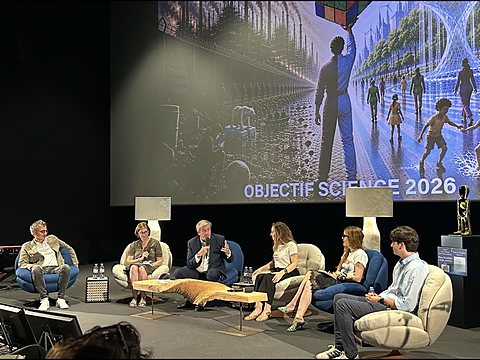
A talk at the Rencontres scientifiques organised by Philippe Camus and Objectif Science, alongside Jacques Attali, Nicolas Bouzou, Nicolas Bordas and Éric Revel among others. How can the economy and finance be reconciled with the planet’s physical limits? Finance’s role in transforming the economy, and how climate and biodiversity enter investment decisions.
Expanded centenary edition of Armand Lunel’s Prix Renaudot, with a foreword by Philippe Zaouati and a preface by Manuel Carcassonne.
After more than twelve years leading the company he founded, Philippe Zaouati pursues his advisory work, his writing and his commitments.
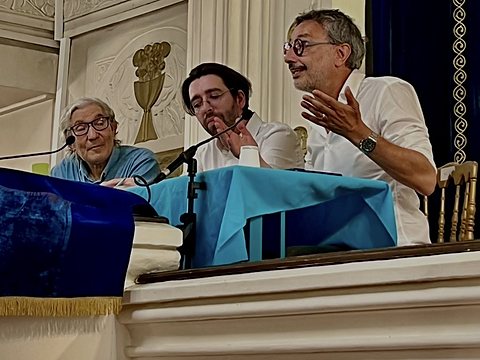
A literary evening before nearly 200 people: the long history of Algeria’s Jews and their entry into French citizenship in 1870. An occasion to compare views on the Crémieux Decree’s effects on Jewish and Arab populations, and to hear Boualem Sansal on his ordeal in Algerian prisons.
With L’éditeur… à part and Réjane Lacoste, first author of the “Identités” series.
An evening around the first Prix Renaudot, with Nadine Labory, Manuel Carcassonne and Georges-Olivier Châteaureynaud, ahead of the reissue by L’éditeur… à part.
Historical novel: 1871, the Kabylie uprising and the Crémieux Decree, seen by a young Jew from Algiers sent to Paris.
Press interviews, podcasts, broadcasts and talks.
With Marina Fabre Soundron: the cost of social inaction, alongside climate risk.
His career, sustainable finance in the age of AI, and what he expects from the entrants.
Ten years after the Paris Agreement, what sustainable finance has changed in the markets.
The Mirova–Thematics AM combination, and taking stock ten years after the Paris Agreement.
€32 billion under management, headwinds in listed markets, the €60 billion target for 2030 maintained.
Mirova, Gigaton and clean-energy financing in frontier markets.
On Discours sur l’état de l’Union, Naufrages and Perelman.
Profile interview, from Gramsci to Mirova’s strategy.
Mirova’s record and strategy, the Orpea affair, the wave of SFDR downgrades.
The genesis of Mirova, artificial intelligence, greenwashing and the Paris financial centre.
Long interview with Dan Burcea about Applaudissez-moi !, lockdown and Samuel K.
On Applaudissez-moi !, writing and sustainable finance.
As co-chair of the climate emergency council, ahead of the 2020 municipal elections.
An unsparing look at green finance, after chairing Finance for Tomorrow.
With Anne-Catherine Husson-Traore, on the publication of La finance verte commence à Paris.
One year of Finance for Tomorrow.
With Delphine Cuny: Brexit, the Pacte law and green finance.
The HLEG final report’s recommendations: taxonomy, labels, green bonds.
As La République en marche’s coordinator for Paris.
The launch of Finance for Tomorrow and the work of the HLEG.
Then head of business development at Natixis Asset Management: the financial crisis as an accelerator for responsible investment.
Eight programmes hosted by Philippe Zaouati: how to finance the transition to a low-carbon economy, and can finance really be sustainable?

On Nicolo-Peccavi, the first Prix Renaudot, and the Jews of the Comtat Venaissin.
The Jews of Algeria before History, on the publication of Le Décret.
Panel of the symposium on the Crémieux Decree.
Panel of the symposium on the Crémieux Decree.

A two-hour conversation about Les Refus de Grigori Perelman, the Fields medallist who refused his medal, and the path of a financier turned novelist.

The minister’s address and Philippe Zaouati’s reply.

With Arnaud Naudan: from the 2008 crisis to the dilemmas of sustainable finance, and the place of doubt in leadership.

With Delphine Darmon: finance’s role in changing the world, the reality of green finance, and writing as a step aside.
Sustainability in listed and private markets, Article 9 funds, data, the creation of Mirova and its move into natural capital.

Masterclass for the Environment and Finance groups of Sciences Po Alumni (audio replay).


Ecological transition and finance, planetary boundaries.

Filmed conversation with Dominique Bourg, in partnership with the Association Europe Finances Régulations.

Article 29, taxonomies, Orpea, financial advisers: a tour of sustainable finance.

A conversation in English on the path of a financier who became a sustainable-investment pioneer.

On the notion of planetary boundaries.

A financial engineer’s path, and redirecting every euro towards impact.

On finance as a tool for transformation.

Video interview at the ESG edition.

With Sandra Gandoin and Christophe Jakubyszyn, one month after the invasion of Ukraine.

With Alexis Gazzo (EY): the real economy, greenwashing, the EU taxonomy and the Green Deal.


Acting for the living world: the new challenges of sustainable finance and its role in the transition.

With Charles Nicolas: how sustainable finance and investors can move the lines. Long term, climate risk, biodiversity.

With Emmanuelle Joseph-Dailly.

Video interview as chair of Finance for Tomorrow.

Green bonds and the Paris financial centre after COP21.

A twenty-minute long-form interview.
Opinion pieces published in the press (Le Monde, Les Echos, L’AGEFI…), on Substack, in the LinkedIn newsletter My Views and in Bastille Magazine. Most are in French.
A hard book, a diagnosis I share — and an argument that undermines it.
A 2 °C world remains insurable, a 4 °C world does not: the line also applies to social violence, after the 17 October riots.
On Le Palais by François-Henri Désérable (Gallimard): a wine fable that is a little too well thought out.
Duras staged by Arnaud Desplechin at the Vieux-Colombier.
Touch capital taxation and entrepreneurs will leave, we are told. Checked.
Novels, essays and reference works. Titles are in French unless stated otherwise.
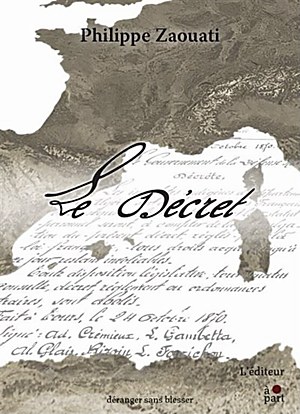
L’éditeur… à part, October 2025
1871, at the height of the Kabylie uprising: Élie, a young Jew from Algiers, leaves for Paris to defend the citizenship the Crémieux Decree has just granted his people. A novel of filiation and identity.

L’éditeur… à part, 2024 (1st ed. Éditions des Rosiers, 2014)
A woman leaves Sofia for Paris; at the funeral of her former lover, in a kibbutz, she is handed a bundle of letters. From Haifa to Istanbul, the shipwrecks of exile and memory.

Le Métier des mots, 2022
January 2034: faced with the failure of the fight against climate change, the President of the United States proposes a radical solution to Congress. Also published in English as State of the Union.
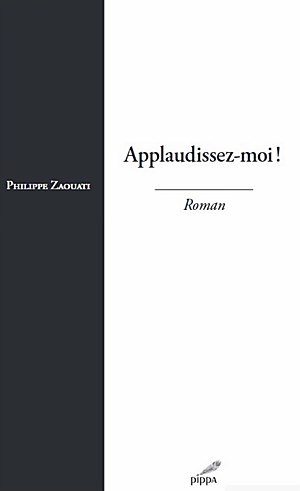
Pippa, 2020
August 2020, mid-pandemic: Samuel K., a financier who moved into sustainable development, is questioned by the financial police. Touch by touch, he reveals what has haunted him since leaving Lehman Brothers in 2008.
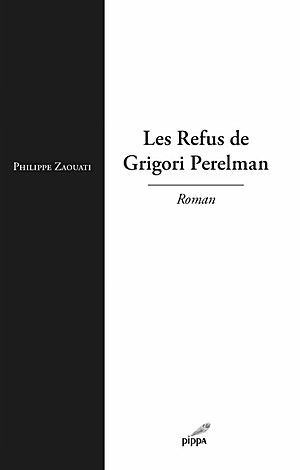
Pippa (in French)
Saint Petersburg, summer 2006: John Ball, president of the International Mathematical Union, tries to persuade Grigori Perelman to accept the Fields Medal. Tangente Prize special jury award; adapted for the stage in 2027.

American Mathematical Society, 2021 — translated from the French by Rachel Zurer
English edition of Les Refus de Grigori Perelman.
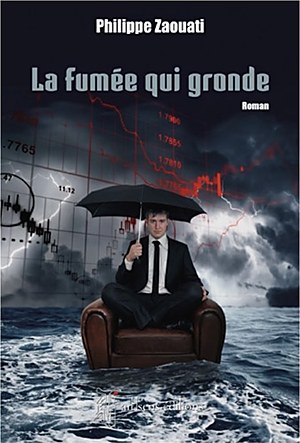
Arhsens éditions, 2011
2008: Emmanuel, a golden boy celebrated for twenty years, is thrown out with a cardboard box in his arms. Facing the wreckage, he searches his past, then flees, to find out what his future will be.

Chut! no. 17, 20 February 2025 — illustrated by Lucia Budzáková
A sequel to Discours sur l’état de l’Union: Destiny, imprisoned, relaunches from her cell the challenge of saving humanity.
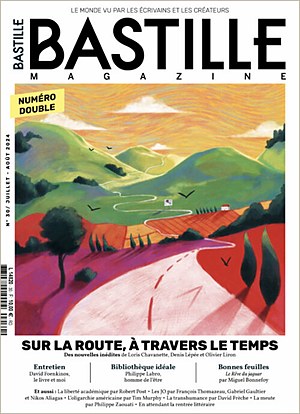
Bastille Magazine no. 30, July–August 2024
Subscribers only on bastillemagazine.com; free to read on LinkedIn.

Chut! no. 10, 13 July 2022 — illustrated by Laure Dorin; audio version as a podcast
Léa slams the door of the flat on rue de Rennes: with seven friends, she has just called on her classmates to desert the system.
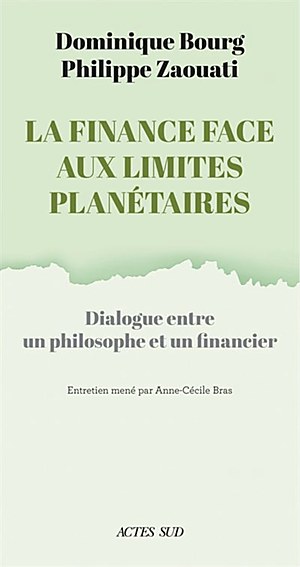
Actes Sud, 2023
A dialogue between a philosopher and a financier, led by Anne-Cécile Bras: can finance serve the living world rather than help exhaust it?
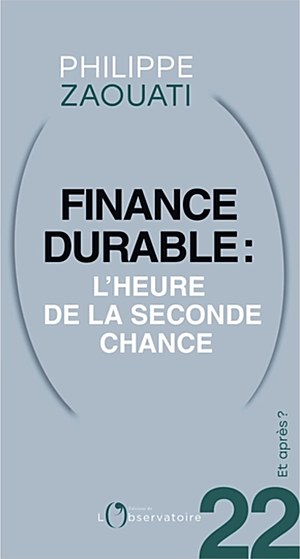
Éditions de l’Observatoire, “Et après ?” series, 2020
What the 2020 crisis reveals about sustainable finance’s unkept promises, and how to give it a second chance to truly fund the transition.
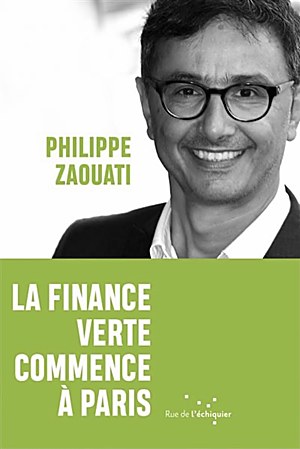
Rue de l’Échiquier, 2018
How Paris became a leading centre for green finance, and what remains to be done for finance to serve the ecological transition. Also published in English as Paris, the Kilometer Zero of Green Finance.
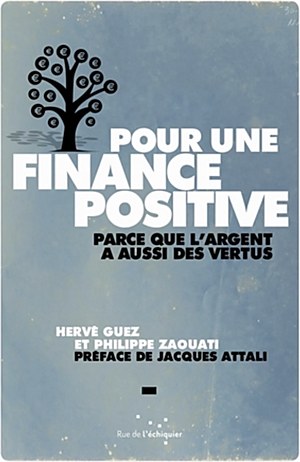
Rue de l’Échiquier, 2014 — with Hervé Guez, preface by Jacques Attali
Because money has virtues too: a manifesto for finance that funds the real economy and the transitions. Social and Solidarity Economy Book Prize; published in English as Positive Finance (Greenleaf).

Economica, “Connaissance de la gestion” series, 1994
One of the first French textbooks on quantitative portfolio management, written during his years at the Caisse des Dépôts.
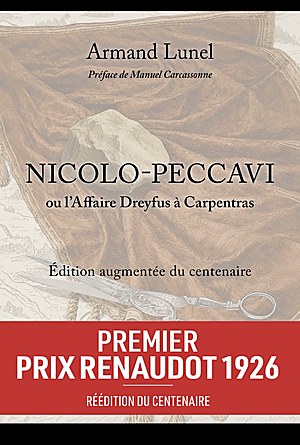
L’éditeur… à part, “Identités” series, 2026
The first ever Prix Renaudot (1926), reissued for its centenary in an expanded edition. Foreword by Philippe Zaouati, preface by Manuel Carcassonne.
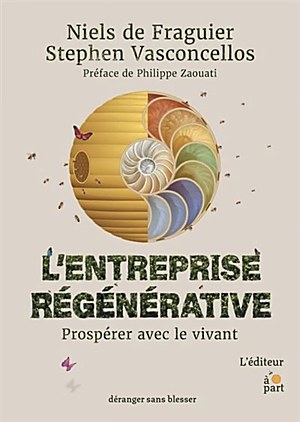
Niels de Fraguier and Stephen Vasconcellos — L’éditeur… à part, October 2025
Preface. How a company can move from limiting its damage to regenerating the living world, and thrive with it.
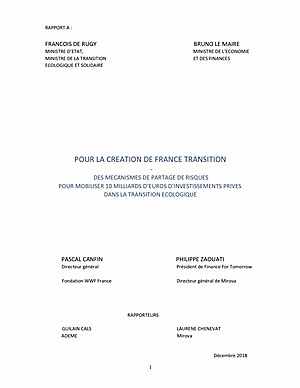
Report to the ministers for the Ecological Transition and the Economy, December 2018 — with Pascal Canfin
Risk-sharing mechanisms to mobilise €10 billion of private investment in the ecological transition.
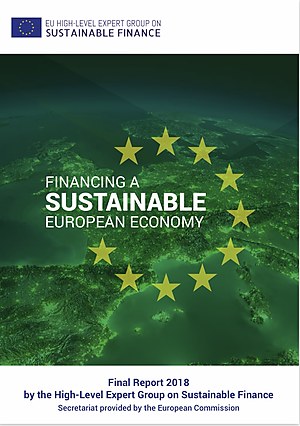
Final report of the High-Level Expert Group on Sustainable Finance, European Commission, 2018
As a member of the HLEG. This report gave rise to the EU action plan on sustainable finance.

La Fabrique Écologique, edited by Géraud Guibert — Rue de l’Échiquier, September 2015
Chapter 4: “How can savings serve the energy transition?”
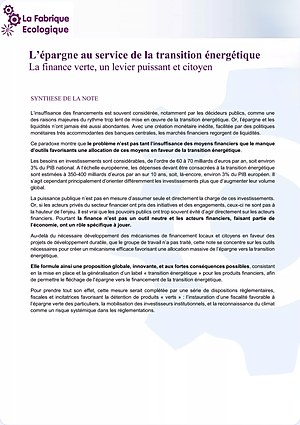
Green finance, a powerful and citizen lever — policy note for La Fabrique Écologique, May 2015
How to steer French savings towards financing the transition.
Revue d’économie financière, no. 40, March 1997, pp. 233-254
Special issue “Pension systems: structure(s), challenges and prospects”. Full text in open access on Persée.
Born in Marseille in 1966. ENSAE graduate (1989), member of the French Institute of Actuaries.
Visiting Artist, from October 2026.
After more than twelve years at its head.
Franco-British initiative on biodiversity credits.
Board and executive committee member, in charge of European advocacy and of developing the Impact Score.
Board member.
Board member; member of the audit committee (2020-2024), then of the nomination committee (2024-2025).
Creates and chairs the corporate foundation dedicated to environmental and social impact.
Delivered to the ministers for the Economy and for the Ecological Transition.
Co-founder and chair of the Paris Europlace initiative, now the Institut de la finance durable.
European Commission expert group behind the EU’s sustainable finance strategy.
Mirova becomes a fully fledged asset management company, a Natixis subsidiary.
Chair of the group, Cambridge Institute for Sustainability Leadership.
Board member.
Responsible investment division within Natixis Asset Management. Chair of the AFG’s SRI committee and of EFAMA’s Responsible Investment working group.
Deputy CEO, member of the executive committee, in charge of business development.
Crédit Agricole Senior Executive Program.
Chairman of the platform linking asset managers and distributors, which he initiated within the Crédit Agricole group (Luxembourg).
Product development, then CEO of the Luxembourg subsidiary; head of marketing and communication.
Head of product development.
Financial engineer, strategic allocation and quantitative management. Publishes La Gestion quantitative (Economica, 1994).
Quantitative portfolio manager. First steps in asset management.
Graduate of the École nationale de la statistique et de l’administration économique; member of the French Institute of Actuaries.
Columns appear on Substack and in the LinkedIn newsletter My Views.
For a speaking engagement, an interview or a publishing proposal.